Benefits of NFC certificates for artworks and prints
Compare NFC with paper and QR: a link with protection options, a tag that can stay with the artwork, and a more personal tap-to-open experience.
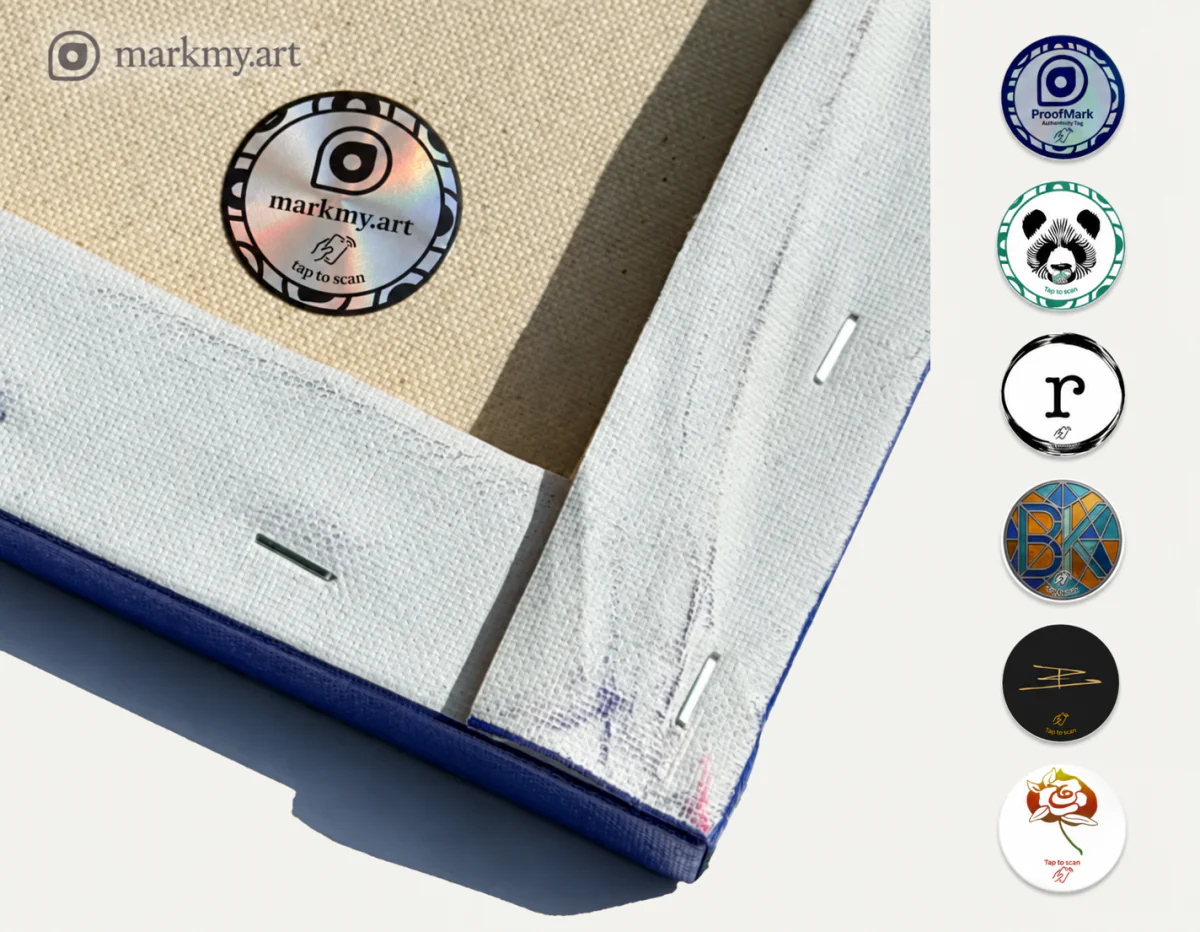
An NFC tag gives someone a tap-to-open route from a physical artwork to its digital certificate. The certificate itself can be shared as a link or PDF; the tag is optional hardware.
Compared with paper or a printed QR code, NFC can add three things: a link with protection options, a point of access that stays with the work, and a more personal moment when someone discovers it.
Make the link harder to tamper with
A QR code is a visible printed link. It can be photographed or covered with another code; the FTC has documented that kind of substitution. Some NFC chips can be set read-only or write-protected, making casual changes to the link stored on the chip harder. NXP documents those options for NTAG213/215/216 chips.
To get that security benefit, prepare the tag in this order:
- Use a compatible tag encoded with the official tag URL. Link it to the intended certificate in your creator account, then tap to confirm it opens the right record.
- Once the tap is correct, have the chip’s stored URL made read-only or write-protected. Ask the supplier to confirm the lock and test that the tag still opens; account linking alone does not make that physical change.
- Attach it with a tamper-evident label or mount suitable for the artwork. Tap it again after attachment and check the physical seal at handover.
Together, those choices make casual redirection and unnoticed tag movement harder than with a bare printed QR label. The stronger link still leads to a certificate whose artist, artwork details and URL should match the physical piece.
Keep the record with the artwork
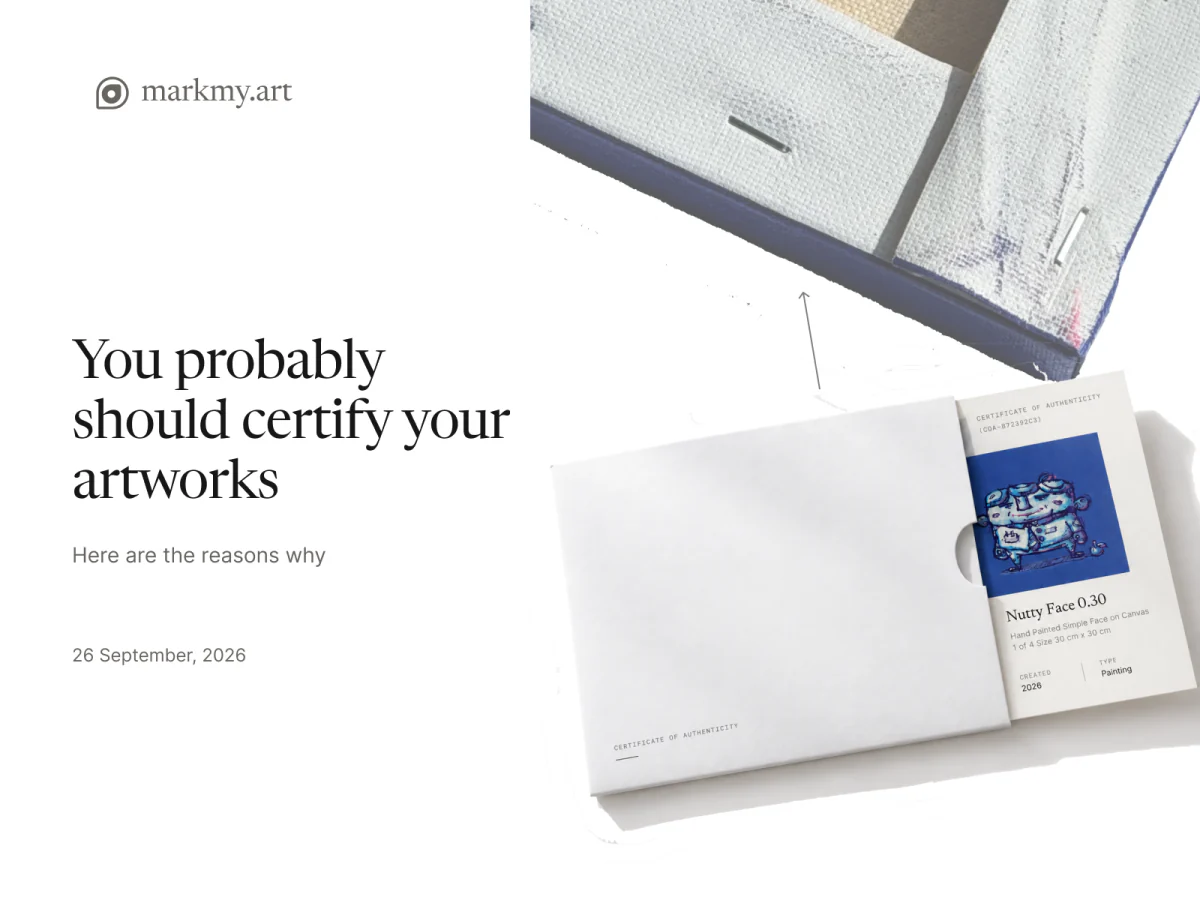
A loose paper certificate or old email may be separated from the piece. A reachable tag on the frame, backing or packaging lets the next person open the current record at the artwork. A QR label can travel with the work too, but NFC can stay visually discreet and needs no camera alignment.
If you choose a tamper-evident label or mount, removal may leave a visible trace. Destructible labels are designed for that purpose. That physical clue comes from the attachment, not from every NFC chip. Use materials suitable for the work; a mark left by removal is not proof of authenticity or ownership.
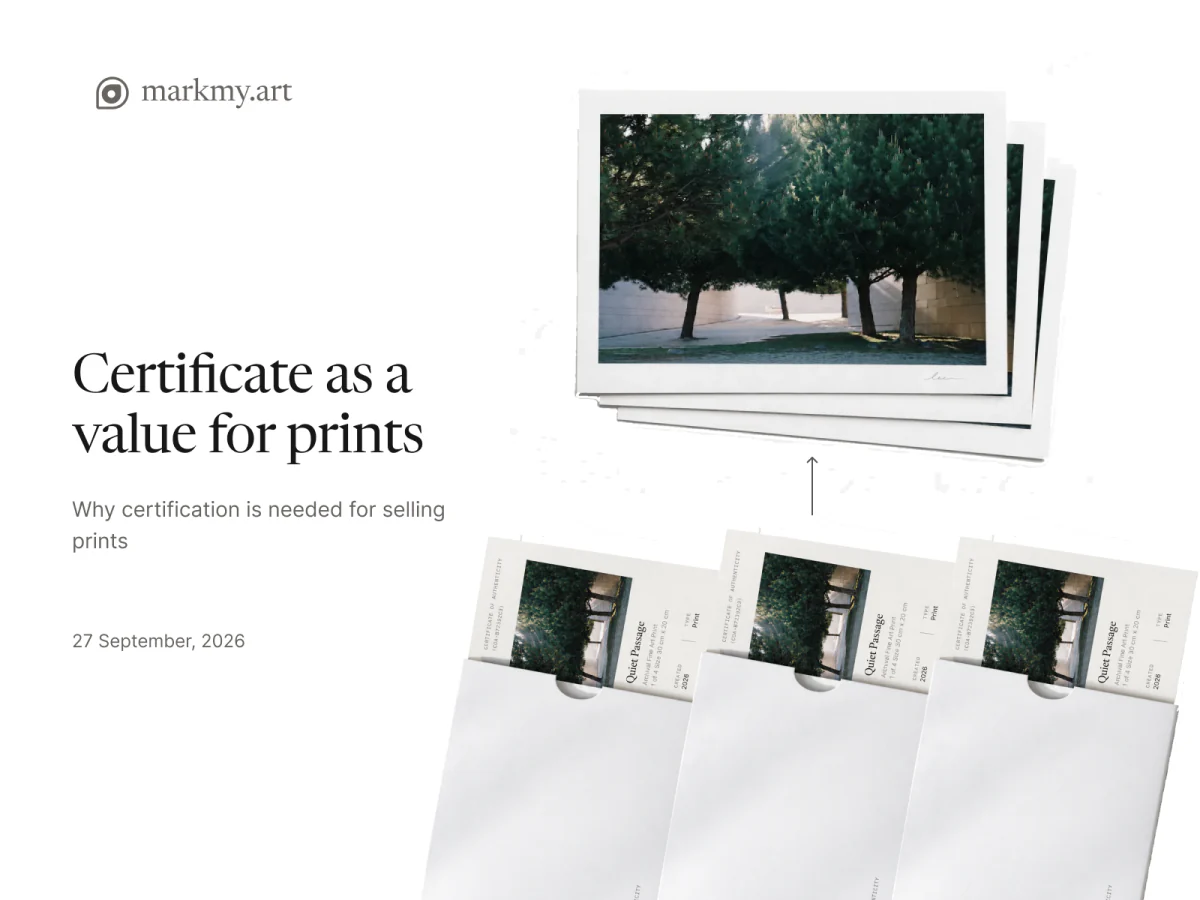
For a print edition, link the tag to the certificate for the exact copy. Print 7 of 30 should show its number, size and certificate code. An open-edition print can have its own code without a fixed total.
Make the encounter feel personal
Hold a compatible phone near the work and the record opens. Compared with unfolding paper or lining up a camera with a square code, the tap can feel like discovering another layer of the artwork. At a studio visit or exhibition, that small reveal gives someone an immediate way into its story.
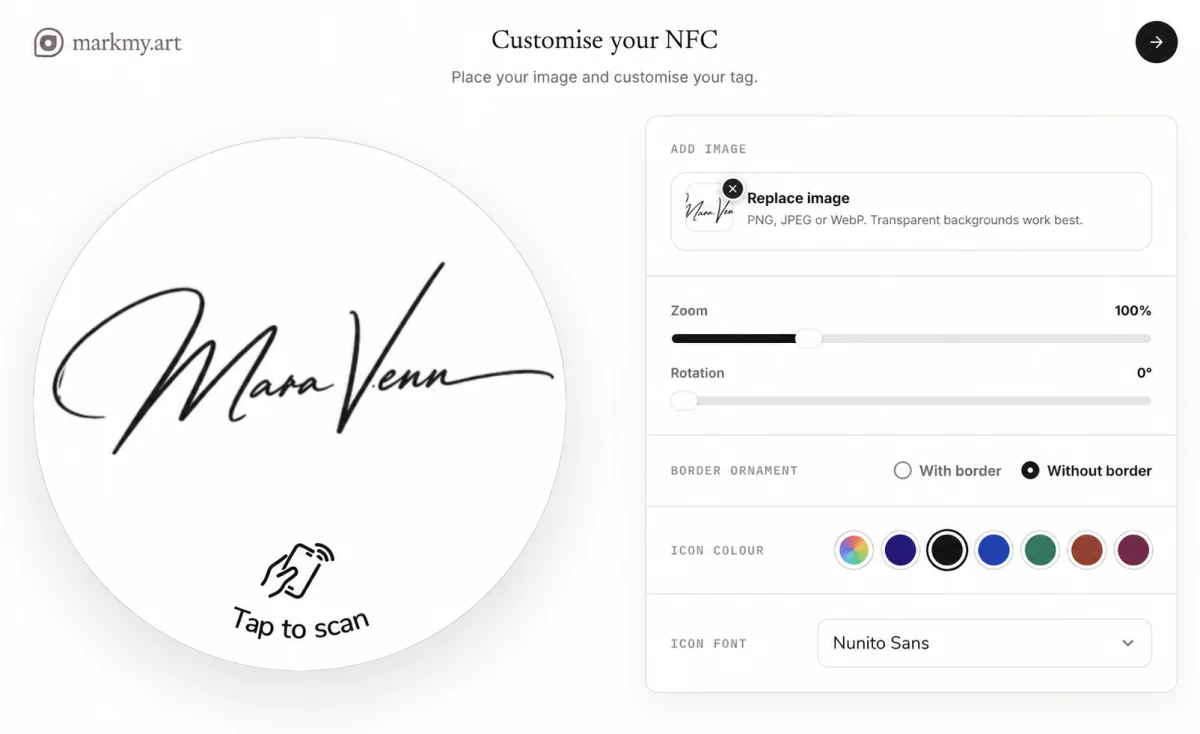
The tag can carry a signature, studio logo or detail from the work. A custom NFC sticker makes the invitation part of your presentation. From the certificate, a visitor can find the artist profile, contact links and other work.
The creator dashboard can count NFC openings separately from QR openings and show approximate view locations. Those are clues about interest, not the physical artwork’s location or the viewer’s identity.
Paper, QR, or NFC?
| Format | What it adds | Limit to keep in mind |
|---|---|---|
| Paper certificate | A physical document a collector can read without a phone or internet. | It can be lost or separated from the work and does not show later record updates. |
| QR code | A low-cost, visible route to the live record through a phone camera. | The printed code can be copied or covered; check the destination URL. |
| NFC tag | A small tap point at the work, with custom design and chip write-protection options. | It needs a compatible phone and internet. Write protection and tamper evidence depend on the specific tag and attachment. |
Paper, QR and NFC can lead to the same certificate. The artist’s statement and accurate artwork details remain the basis for checking it.
When an NFC tag is worth adding
Add NFC when a tap, discreet placement or custom marker improves how someone meets the work. A QR code may be enough when cost, phone compatibility or a visible code matters more; paper remains useful at handover.
For a security-focused setup, confirm the chip’s write protection and the attachment’s tamper evidence, then test the public link. These layers strengthen the route to the record; the artist’s statement and accurate artwork details remain essential.
To add one, explore NFC tags and follow the certificate setup guide. Select the right certificate before confirming which record the tag opens.