Why does an art print need a certificate of authenticity?
Record the process and edition promise behind an artist-authorised print, identify each physical copy, and keep a connection with its maker.
The image is repeatable; your print is specific
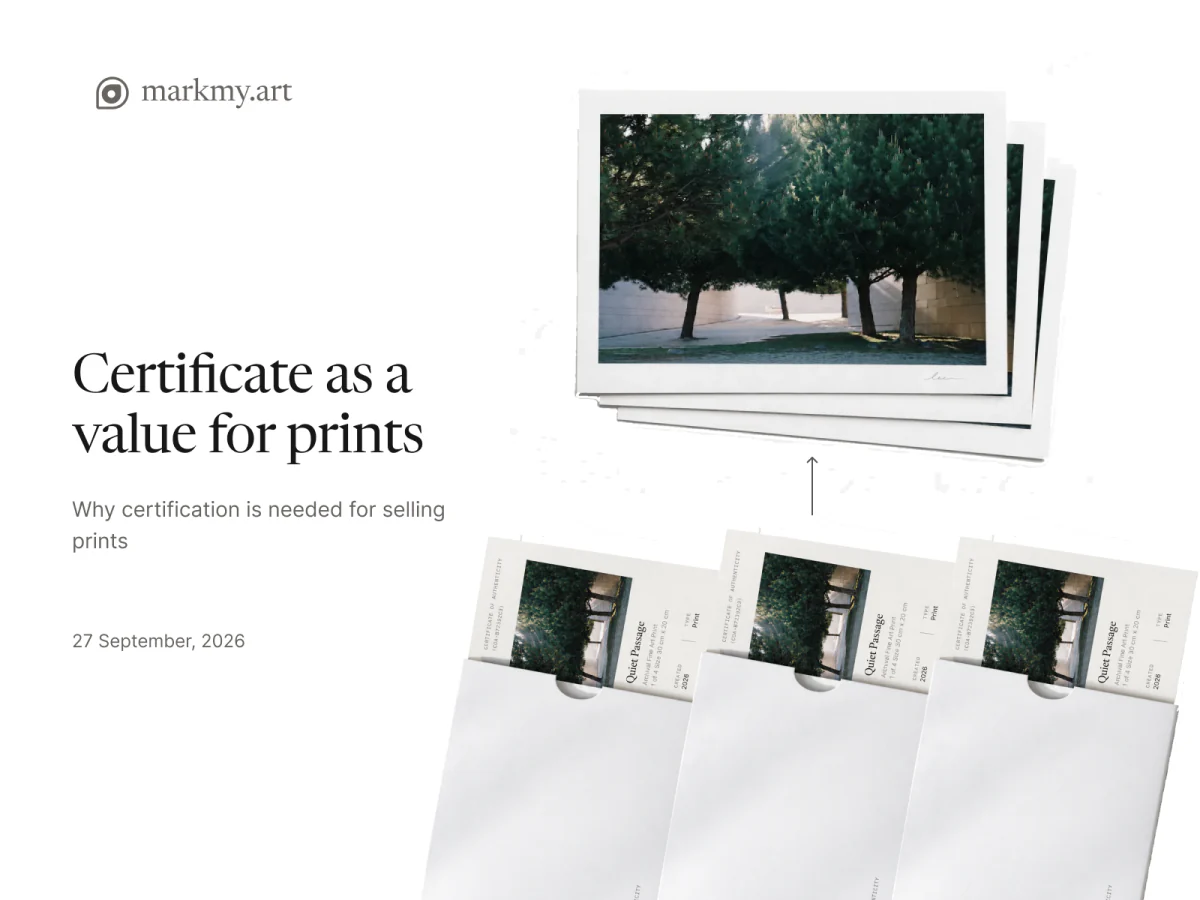
A file or screenshot can be printed many times. That does not make every sheet part of the edition you chose to issue. A lookalike printed without your approval remains outside it. Your print has a maker, process, paper, size and, sometimes, a place in a numbered run. A certificate records your approval of that particular copy.
Prints are a collecting medium in their own right. In the 2025 Art Basel and UBS collector survey, 40% of high-net-worth fine-art buyers had bought a print or multiple in 2024–25. Buyers need to know which object came from you, not just where the image came from.
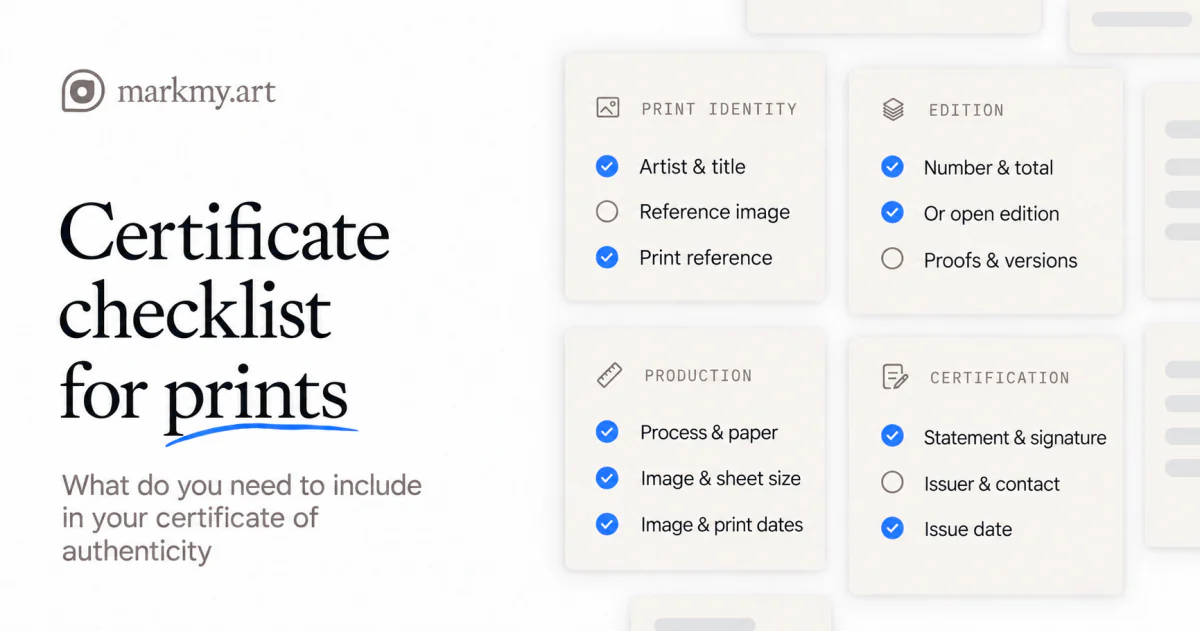
Say what kind of print you made
An artist-made print and a reproduction can both show art on paper, but they are different offers. Tate describes an artist-created lithograph as a new work made from hand-drawn plates; it labels its made-to-order custom prints as reproductions. Say whether your print was created as a print or reproduces another work, and name the process.
If a printer or lab makes the sheet, credit them and say what you approved. The image maker, physical printer and certificate issuer can be different people. A buyer should be able to see each role clearly.
Make the edition promise checkable
For a limited edition, record the number, total, relevant size and any artist’s proofs. If the same image will appear in other sizes or editions, say so. For an open edition, say “open edition” and give each print its own reference without implying a fixed total.
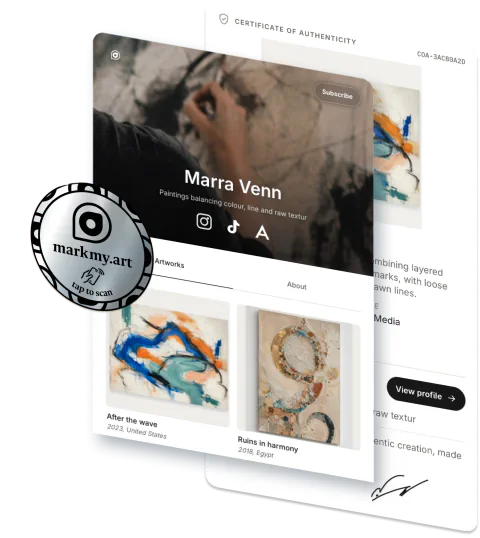
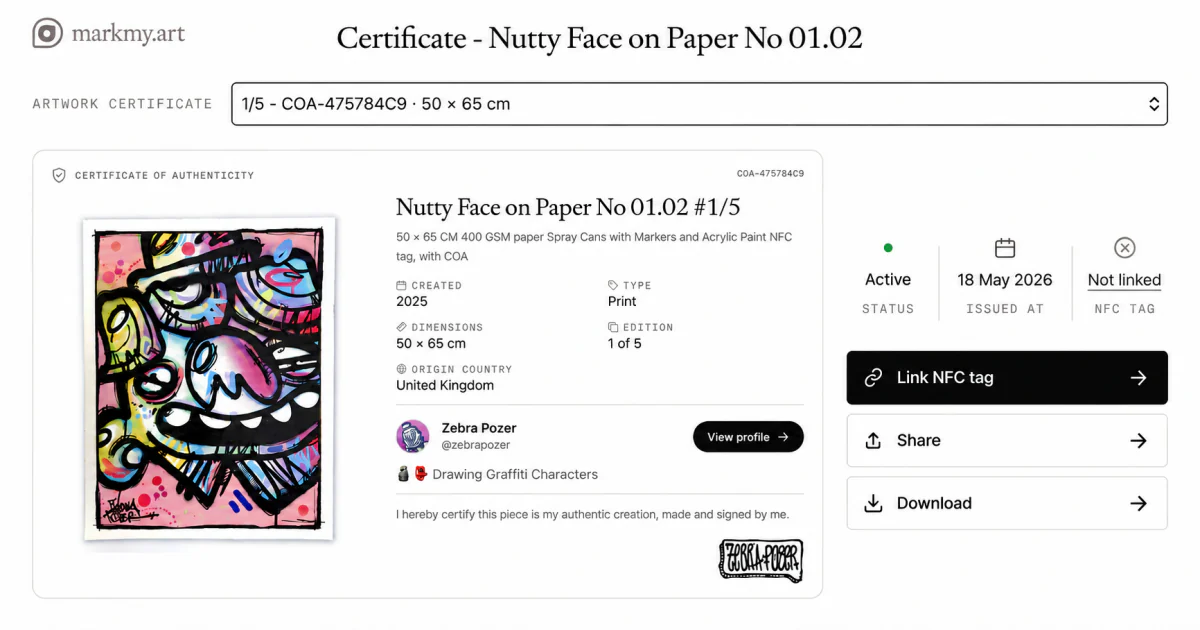
Keep that reference in your studio register and with the physical sheet. Hahnemühle uses matching numbered holograms on an artwork and its certificate to identify a pair. A Markmy digital certificate gives each issued print its own record; an optional NFC tag can open that record from the print. Neither replaces accurate edition records.
Give buyers a record they can judge
In Artsy’s 2025 survey of 1,236 collectors, 69% said a lack of transparency had made them hesitate to buy art; 32% had hesitated because they were unsure a work was worth the price. These figures cover art generally, not just prints. A digital certificate can answer concrete questions: who issued this sheet, how was it made, and what edition terms apply?
A certificate cannot set a price or turn an open edition into a limited one. It makes the basis for a collector’s decision visible: your approval, the print’s physical quality and the edition you actually made. Buyer demand still shapes the market price. A lasting record means no one has to rely on a sale listing that may disappear.
Keep the artist close to the buyer
The same Artsy collector survey found that 54% valued behind-the-scenes access to artists from galleries and 62% valued exclusive previews. A digital certificate linked to your artist profile lets a buyer learn about your work and find your contact details. If your profile offers updates or enquiries, they can choose to stay in touch.
That path can survive a gift or resale: the next owner can find you even if the original shop page disappears. Keep your profile and contact links current. Opening a certificate does not tell you who the viewer is or add them to a mailing list.